

Winter storms can strike with little warning, bringing heavy snow, ice, freezing temperatures, and dangerous travel conditions. In Arkansas and across the U.S., the National Oceanic and Atmospheric Administration (NOAA) and the National Weather Service emphasize starting preparations as soon as a forecast hints at winter weather. Acting ahead of time can prevent injuries, power outages, and other hazards like carbon monoxide poisoning or overexertion while shoveling.
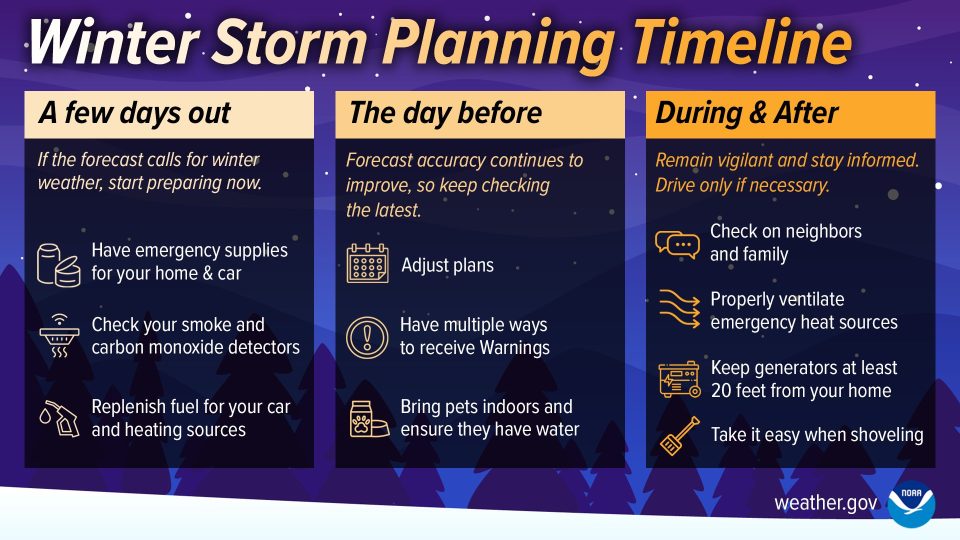
A helpful visual guide from NOAA outlines a clear Winter Storm Planning Timeline, dividing preparations into three key phases: a few days out, the day before, and during/after the storm. Here’s a breakdown of the essential steps to help you and your family stay safe.
A Few Days Out: Start Preparing Now
If forecasts indicate potential winter weather, don’t wait—begin your preparations immediately. Early action gives you time to gather supplies and make adjustments.
- Stock up on emergency supplies for your home and car, including non-perishable food, water, flashlights, batteries, blankets, and a first-aid kit.
- Test your smoke detectors and carbon monoxide detectors to ensure they work properly—replace batteries if needed.
- Replenish fuel for your vehicle and any heating sources, such as propane, kerosene, or firewood.
- Monitor updates from reliable sources like weather.gov or local National Weather Service offices.
These proactive steps build a strong foundation, reducing stress when conditions worsen.
The Day Before: Fine-Tune Your Plans
As forecast accuracy improves closer to the event, revisit and refine your preparations.
- Keep checking the latest forecasts and adjust travel, work, or school plans accordingly.
- Ensure you have multiple ways to receive weather warnings, such as NOAA Weather Radio, mobile alerts, apps from FEMA or the American Red Cross, or local emergency notifications.
- Bring pets indoors, provide them with plenty of water and food, and make sure they’re protected from the cold.
- Double-check that your emergency kit is complete and accessible.
Staying flexible allows you to respond to the most up-to-date information.
During and After the Storm: Stay Vigilant and Safe
Once the storm hits, prioritize safety and avoid unnecessary risks.
- Remain vigilant—stay informed through official channels and heed any warnings or evacuation advice.
- Drive only if absolutely necessary; icy roads and poor visibility increase accident risks significantly.
- Check on neighbors, especially the elderly, those with disabilities, or anyone living alone.
- Use heating sources safely: Properly ventilate to prevent carbon monoxide buildup, and keep generators at least 20 feet from your home to avoid deadly fumes.
- Take it easy when shoveling snow—overexertion can lead to heart attacks or injuries; pace yourself and use proper technique.
After the storm passes, continue monitoring conditions before venturing out, and watch for hazards like downed power lines or ice-covered surfaces.
Winter weather doesn’t have to catch you off guard. By following this timeline and preparing in advance, you can protect yourself, your loved ones, and your property. For the latest forecasts and more detailed resources, visit weather.gov or your local National Weather Service office (such as Little Rock for Arkansas residents). Stay safe this winter season!
Source: Adapted from NOAA/National Weather Service winter storm preparedness guidance.
