

BATESVILLE — Tick activity across the United States is reaching levels not seen in nearly a decade, with emergency department visits for tick bites at their highest rate for this time of year since 2017, according to the Centers for Disease Control and Prevention.
While the South Central region, including Arkansas, has not experienced the same spikes reported in parts of the Northeast and Midwest, health officials say warmer winters and favorable spring conditions have contributed to increased tick activity across the Natural State.
The Arkansas Department of Health is encouraging residents to take extra precautions as outdoor recreation, yard work and travel increase during the summer months.
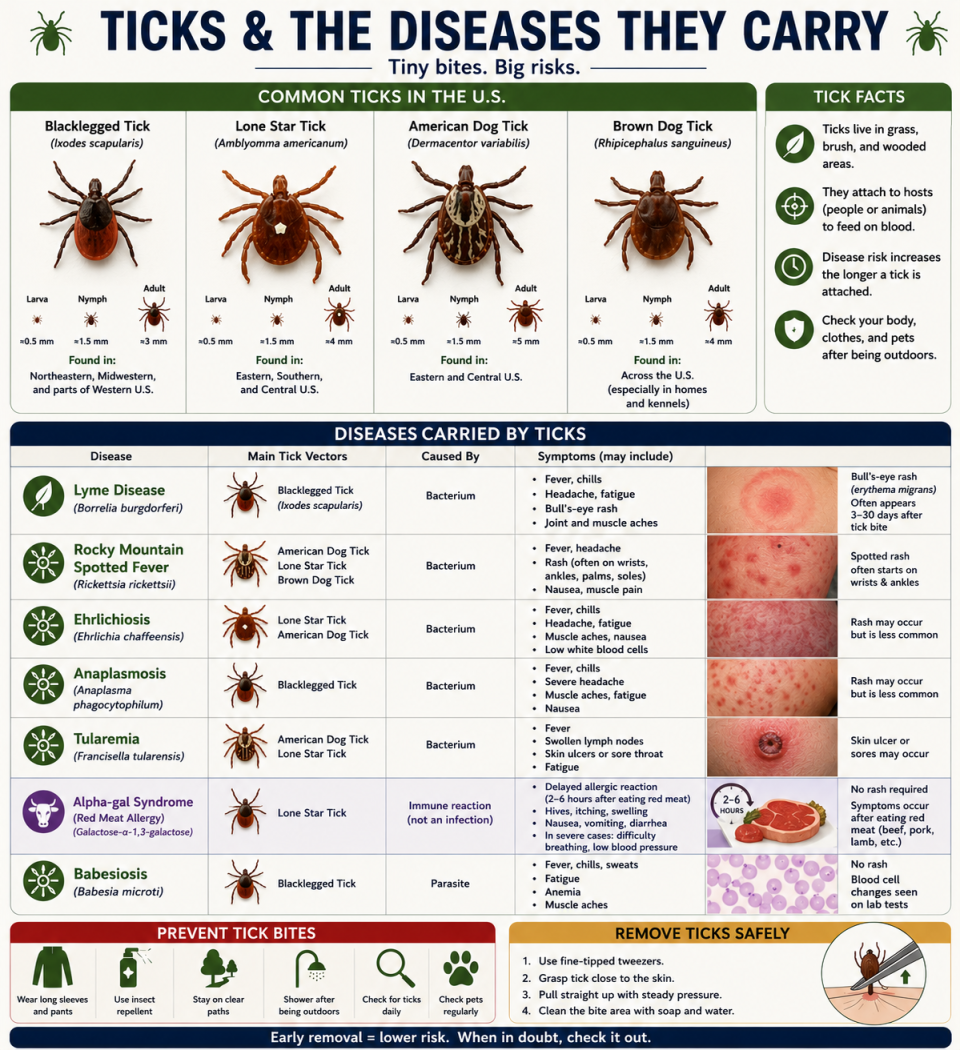
Ticks in Arkansas can transmit several diseases and health conditions, including Rocky Mountain spotted fever, ehrlichiosis, tularemia and, in some cases, Lyme disease. Health officials also continue to monitor concerns surrounding Alpha-gal syndrome, a potentially life-altering allergic condition linked to bites from the Lone Star tick.
Alpha-gal syndrome can cause an allergic reaction to red meat and other mammal-derived products. Symptoms may include hives, stomach pain, nausea, difficulty breathing and, in severe cases, anaphylaxis. Unlike many food allergies, reactions often occur several hours after consuming beef, pork, venison or other mammalian products, making the condition difficult to recognize.
The Lone Star tick, identified by the distinctive white spot found on adult females, is one of the most common tick species in Arkansas and has been associated with a growing number of Alpha-gal cases throughout the South.
Health experts recommend several steps to reduce the risk of tick bites:
• Wear light-colored long sleeves and pants when outdoors, and tuck pants into socks or boots when possible.
• Use EPA-registered insect repellents containing DEET on exposed skin and permethrin on clothing and outdoor gear.
• Avoid walking through tall grass, brush and leaf litter. Stay near the center of trails whenever possible.
• Perform thorough tick checks on yourself, children and pets after spending time outdoors.
• Shower within two hours of coming indoors to help wash away unattached ticks.
• Remove attached ticks promptly using fine-tipped tweezers, grasping the tick close to the skin and pulling upward with steady pressure.
Residents who develop symptoms such as fever, rash, severe fatigue, muscle aches, joint pain or unusual allergic reactions following a tick bite should consult a healthcare provider.
Officials also recommend reducing tick habitat around homes by keeping grass mowed, removing leaf litter and creating barriers of gravel or wood chips between wooded areas and lawns.
For more information on tick-borne illnesses and prevention, residents can contact the Arkansas Department of Health or visit healthy.arkansas.gov.
