

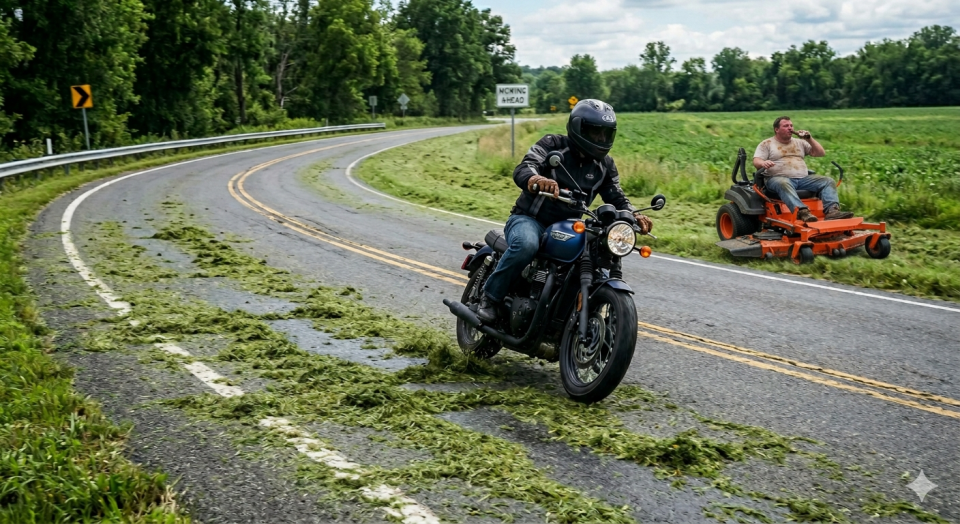
As spring and summer lawn care ramps up across Arkansas, a growing safety concern is getting attention from drivers, motorcyclists, and local officials alike: grass clippings being blown or left in the roadway after mowing.
While it may seem harmless to finish a yard by blowing clippings toward the street, experts and safety advocates warn it can create real hazards—especially for motorcyclists and bicyclists who depend on consistent road traction.
Grass Clippings Can Become a Road Hazard
Fresh grass clippings may look light and harmless, but when spread across asphalt they can behave much like wet leaves or light gravel. They reduce traction, especially during turns or braking.
Motorcyclists are particularly vulnerable. Even a thin layer of clippings can cause rear tires to slip, especially in curves or at low speeds in residential areas. Safety discussions and public reports frequently compare the effect to riding over wet paint or loose sand on pavement.
In some documented cases discussed by riders, clippings left on roadways have contributed to loss of control incidents, particularly in neighborhoods where mowing directly borders narrow streets.
Is It Illegal to Blow Grass Into the Road?
There is no single federal law in the United States that specifically bans blowing grass clippings into the road. However, many states and local governments regulate the practice under broader laws such as:
- Littering and illegal dumping statutes
- Traffic hazard and obstruction laws
- Nuisance or public safety ordinances
In Arkansas, state law does not explicitly mention grass clippings in roadway language, but local municipalities may regulate debris on public streets. For example, some Arkansas city codes treat yard waste in the roadway as a misdemeanor-level nuisance or safety violation.
Legal interpretations generally fall into one key principle: if yard debris creates a hazard or obstruction on a public roadway, the person responsible can potentially be cited or held liable if an accident occurs.
Liability Can Extend Beyond Fines
Even where enforcement is rare, civil liability is a major concern. If grass clippings contribute to a crash—especially involving a motorcycle—the property owner or lawn service responsible for depositing them could face negligence claims.
Courts often consider whether a “reasonable person” would understand that placing slippery organic material on a roadway creates risk.
What Lawns Owners and Landscapers Are Expected to Do
While practices vary, most lawn care professionals follow a basic standard:
- Direct mower discharge back into the yard
- Blow clippings away from streets, driveways, and sidewalks
- Avoid leaving debris in gutters or roadway edges
- Clean up curb lines after mowing
In many communities, this is considered both good etiquette and basic safety practice.
A Simple Safety Habit That Prevents Bigger Problems
For homeowners, the solution is straightforward: keep clippings on your property. Mulching blades, proper mowing direction, and a final blow-back into the yard can eliminate roadway hazards entirely.
What seems like a small cleanup shortcut can quickly turn into a safety issue for passing vehicles—especially motorcycles, where even minor traction loss can lead to serious accidents.
As lawn care season continues, safety advocates say awareness is the most important step. Keeping grass off the road helps protect drivers, reduces liability, and keeps neighborhoods safer for everyone sharing the street.
