

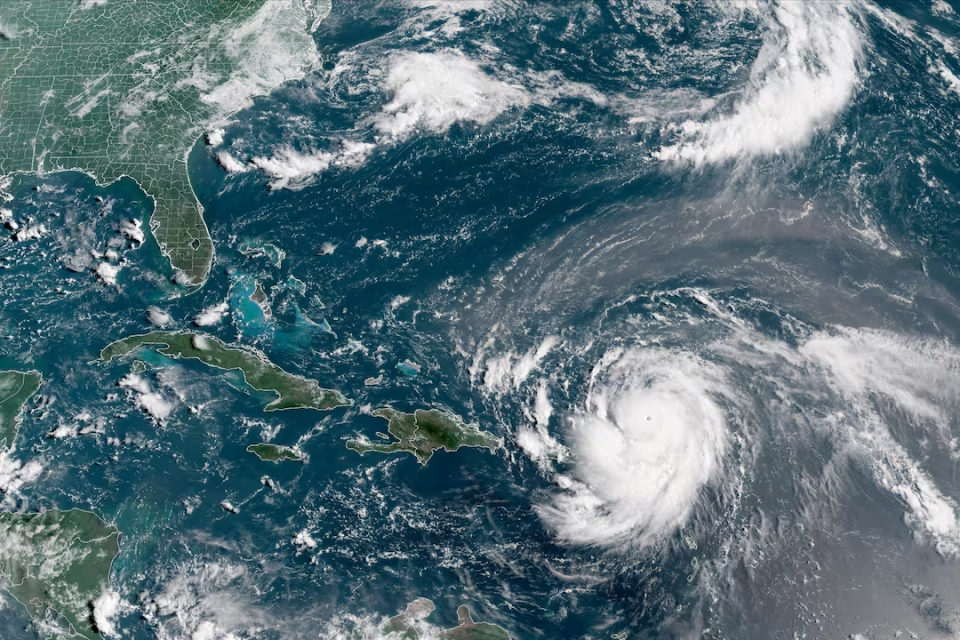
Puerto Rico – Hurricane Erin, the first hurricane of the 2025 Atlantic season, has rapidly intensified into a Category 5 storm with maximum sustained winds of 160 mph, according to the National Hurricane Center (NHC) as of August 16, 2025. Located approximately 235 miles east-northeast of San Juan, Puerto Rico, and 105 miles north of Anguilla, Erin is moving west-northwest at 15 mph, posing significant risks to the northern Leeward Islands, Virgin Islands, and Puerto Rico through Sunday, August 17, but no direct threat to Arkansas, including Batesville.
Erin strengthened from a tropical storm to a Category 5 hurricane in just 24 hours, reaching 160 mph by late Saturday, August 16, before slightly weakening to a Category 4 with 145 mph winds by Sunday morning due to an eyewall replacement cycle, per NHC updates. The storm is expected to pass north of the Leeward Islands today, bringing 2–4 inches of rain, with isolated areas seeing up to 6 inches, potentially causing flash flooding and mudslides. Tropical storm watches are in effect for Anguilla, Barbuda, St. Martin, St. Barthelemy, Saba, St. Eustatius, Sint Maarten, and the Turks and Caicos Islands.
The NHC forecasts Erin to turn northwest by Monday, August 18, staying east of the Bahamas and hundreds of miles off the U.S. East Coast. By midweek, the storm is expected to expand significantly, doubling or tripling in size, generating dangerous surf and life-threatening rip currents along the U.S. East Coast, particularly from August 20–27. Coastal areas like North Carolina’s Outer Banks may see waves of 8–12 feet, with South Carolina and Virginia expecting 6-foot waves. A cold front is likely to keep Erin offshore, minimizing direct U.S. impacts.
Erin’s rapid intensification, fueled by warm sea-surface temperatures and low wind shear, underscores the NHC’s prediction of an above-normal 2025 Atlantic hurricane season, with peak activity expected through October. For updates, visit www.nhc.noaa.gov
