

Ravenden, AR – A group called Return to the Land (RTTL), based in rural Sharp County near Ravenden, has drawn significant attention and criticism for establishing a private, whites-only community on 160 acres of land. Founded in 2023 by Eric Orwoll and Peter Csere, RTTL describes itself as a private membership association for individuals of “European ancestry” with “traditional values,” explicitly excluding non-whites, Jewish people, and members of the LGBTQ+ community. The group’s activities, located less than an hour from Batesville, have raised concerns among civil rights organizations and local officials about potential violations of anti-discrimination laws.
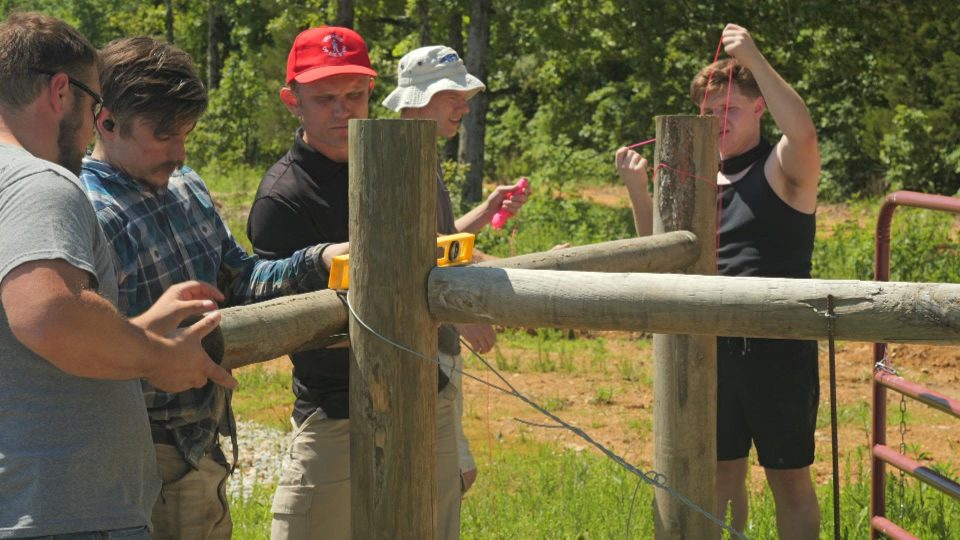
RTTL’s flagship settlement, located at 480 Browns Creek Road, consists of tents, campers, and portable buildings, with approximately 40 residents living off-grid. The group has built cabins, roads, wells, a community center, and a schoolhouse for homeschooling children, aiming to create a self-sustaining “homestead community.” Members must verify their racial background through a written application and interview, paying to join the association. RTTL’s website outlines plans to expand with additional communities in Arkansas, the Ozarks, the Deep South, and Appalachia, with a potential new site near Springfield, Missouri. Co-founder Eric Orwoll has expressed ambitions to establish similar communities across all 50 states, citing affordable land and a “predominantly white population” as reasons for choosing northern Arkansas.
The group’s practices have sparked significant backlash. The Anti-Defamation League (ADL) labeled RTTL as part of a “growing trend in white separatist organizing,” arguing that its exclusionary policies violate the Arkansas Fair Housing Act and the federal Fair Housing Act of 1968. “We urge the Arkansas Fair Housing Commission, local elected officials, and law enforcement to ensure Northeast Arkansas remains a welcoming and inclusive community,” said Lindsay Baach Friedmann, ADL South Central regional director. Arkansas Attorney General Tim Griffin has also condemned the group, stating, “Racial discrimination has no place in Arkansas or anywhere in a free society.”
Orwoll defends RTTL’s legality, claiming that as a private membership association, it does not sell real estate and is protected under freedom of association laws. “The attorneys we’ve consulted believe what we’re doing is legal,” he told regional media. However, legal experts question this, noting that real estate development with explicit racial restrictions likely violates anti-discrimination laws. The group has reportedly invested tens of thousands of dollars in legal research to support its framework.
RTTL promotes its vision through social media, including videos showcasing rural life and fundraising campaigns, such as one offering cash rewards to encourage population growth among members. The ADL estimates RTTL has raised about $300,000 from land sales and $20,000 from crowdfunding since 2023. Critics, including the NAACP, warn that the group’s actions revive “discredited and reprehensible forms of segregation,” while residents of nearby communities like Ravenden, with a population of 423, express concern about the return of segregationist attitudes.
As RTTL continues its activities in Sharp County, the debate over its legality and impact on Northeast Arkansas remains unresolved. Local authorities have not yet announced specific actions, but the controversy underscores the region’s commitment to fostering inclusive communities.
