

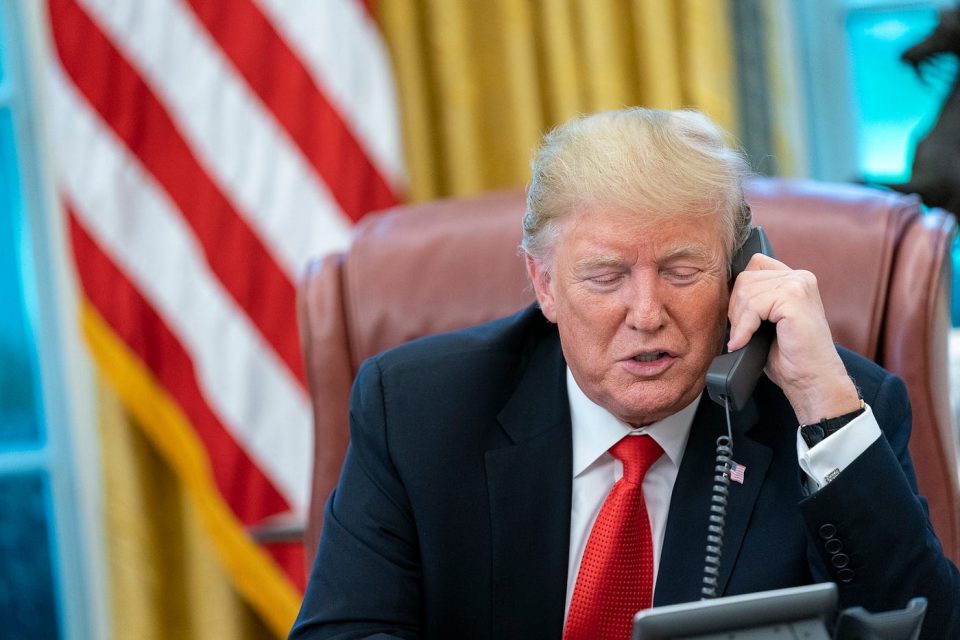
Washington, D.C. – President Donald Trump has reignited tensions in the U.S.-China trade dispute, announcing plans for sweeping new tariffs that could double the cost of Chinese imports entering the United States. The move, detailed in a series of social media posts and Oval Office remarks, targets Beijing’s recent restrictions on critical rare earth minerals and signals a potential breakdown in fragile economic detente.
The Bold Tariff Announcement
On Friday, Trump declared that the U.S. would impose an additional 100% tariff on all Chinese goods starting November 1, layering it atop the existing 30% duties already in place. This escalation, he warned, could take effect even sooner if China fails to reverse course. In a Truth Social post, Trump lambasted Beijing’s actions as “shocking” and “hostile,” accusing the country of holding global supply chains “captive” through its dominance in essential materials. He coupled the tariff threat with new export controls on “any and all critical software” from American companies, including tools vital for cloud computing and artificial intelligence, set to begin on the same date.
The president’s rhetoric was unyielding: “China has become very hostile,” he told reporters, emphasizing that the U.S. possesses countermeasures for every resource Beijing controls. This comes just nine days before a scheduled expiration of temporary tariff relief measures negotiated over the summer.
Roots of the Renewed Conflict
The trigger for Trump’s response lies in China’s tightened grip on rare earth elements—metals indispensable for everything from smartphone batteries and computer chips to jet engines and lasers. Last week, Beijing expanded export controls, mandating special approvals for foreign shipments and imposing permits on related mining, smelting, and recycling technologies. Products destined for military use face outright rejection, creating a backlog of license applications and disrupting global manufacturing.
China processes about 70% of the world’s rare earths and produces 93% of permanent magnets, giving it unparalleled leverage. Trump framed these steps as a betrayal of the tariff truce hammered out earlier this year in neutral venues like Switzerland and the United Kingdom. That agreement had dialed back duties after months of brinkmanship, but underlying frictions persisted: U.S. bans on advanced chip sales to China, restrictions on American soybeans, and fresh port fees targeting China-linked vessels starting this week.
Experts view China’s maneuvers as a disproportionate retaliation to American sanctions on its firms, but one that risks overplaying its hand in a high-stakes game of economic chicken.
Market Turmoil and Economic Ripples
Wall Street wasted no time reacting to the specter of renewed trade hostilities. The S&P 500 plunged more than 2.7% on Friday—its steepest one-day drop since April—erasing recent gains and dragging tech stocks deeper into the red during after-hours trading. Investors sought safety in gold and U.S. Treasuries, while the dollar weakened against major currencies.
The broader fallout could be severe. Analysts warn that 100% tariffs would supercharge inflation at a time when the U.S. economy grapples with a fragile job market and fallout from a partial government shutdown, including layoffs of federal workers. For consumers, everyday items like electronics, appliances, and automobiles—many reliant on Chinese components—could see sharp price hikes. Businesses face snarled supply chains, with the European Union Chamber of Commerce in China already decrying added complexity in rare earth sourcing.
On the global stage, the measures threaten a slump in worldwide growth, echoing fears from earlier tariff salvos that nearly tipped the world into recession. U.S. industries, from aerospace to defense, could suffer as access to vital minerals dries up, undermining efforts to bolster domestic production.
Diplomatic Fallout and Uncertain Talks
Trump’s threats cast a shadow over a potential summit with Chinese President Xi Jinping, slated for late October on the sidelines of the Asia-Pacific Economic Cooperation forum in South Korea. In his initial post, Trump declared “no reason” for the meeting, though he later softened, saying he hadn’t canceled it outright and that de-escalation remained possible.
Beijing has stayed mum so far, with its Washington embassy declining immediate comment. Yet observers like Sun Yun of the Stimson Center see wiggle room for both sides to pull back, preserving the leaders’ face-to-face as a venue for concessions. Scott Kennedy of the Center for Strategic and International Studies quipped that “things are going to get interesting,” suggesting the posturing could amp up pressure ahead of any parley—or harden positions for prolonged negotiations.
Trump’s history of tariff brinkmanship offers a sliver of optimism: he has walked back similar ultimatums before, fueling investor bets on the “TACO” trade—Trump Always Chickens Out. Still, with stakes this high, the coming weeks will test whether bluster yields to bargain or spirals into full confrontation.
Broader Implications for Global Trade
This flare-up underscores the fragility of U.S.-China relations, where economic weapons increasingly substitute for outright conflict. For Trump, it’s a return to his signature playbook: using tariffs as leverage to extract wins on trade imbalances, intellectual property theft, and market access. Critics, however, decry the approach as reckless, punishing American families and allies alike while empowering China’s state-driven economy.
As November 1 looms, businesses and policymakers brace for disruption. The tariff truce’s unraveling could redefine global commerce, forcing a scramble for alternative suppliers and accelerating the great decoupling of the world’s top economies. In a divided Washington, the moves also stoke partisan divides, with Democrats warning of consumer pain and Republicans cheering the tough stance.
For now, the world watches as two superpowers circle each other, rare earths and retaliatory duties in hand, wondering if cooler heads—or sharper calculations—will prevail.
