

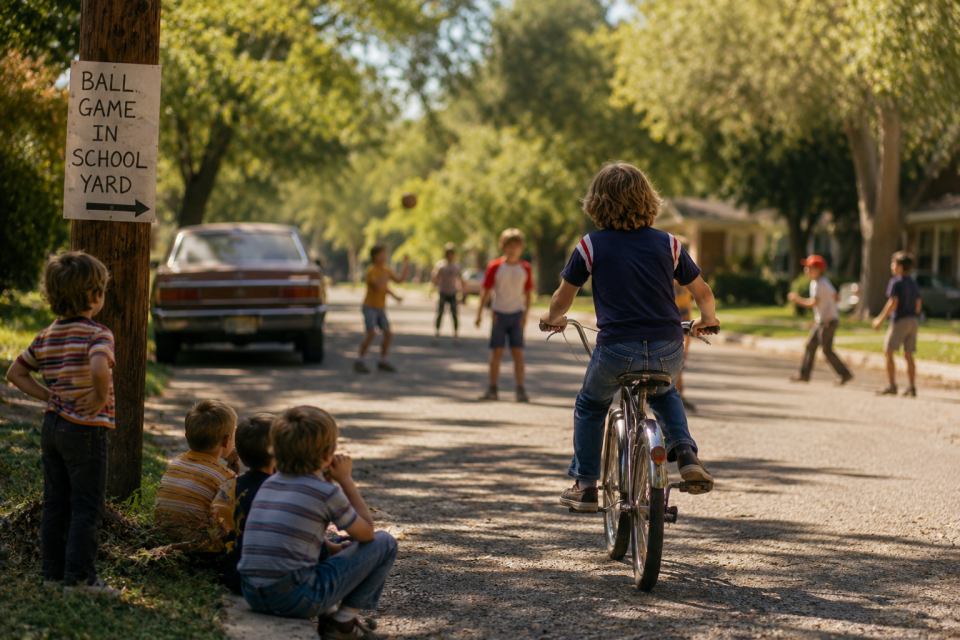
For many Americans who grew up in the 1960s and 1970s, childhood often meant riding bikes without supervision, settling playground disputes without adult intervention and hearing a simple instruction before heading out the door: “Be home by dinner.”
A recent discussion circulating online has revived a long-running debate among psychologists and parents alike: Did children from previous generations become more emotionally resilient because they had greater independence and fewer adults managing their daily problems?
The conversation stems from a recent meta-analysis that examined dozens of studies on “overparenting,” sometimes referred to as helicopter parenting. Researchers found small but consistent links between highly controlling parenting styles and increased rates of anxiety, depression and other internalizing symptoms among adolescents and young adults. The study did not conclude that less supervision is always better, nor did it compare today’s children directly to those raised in the 1960s and 1970s, but it did suggest that excessive intervention may have unintended consequences.
Researchers reviewed 52 studies involving thousands of participants and found that children who experience more autonomy often have greater opportunities to develop self-regulation skills, emotional control and problem-solving abilities. These are the same skills many people associate with resilience.
Experts caution, however, that the phrase “benign neglect,” which has been used in some discussions about the study, can be misleading. Child development specialists emphasize that genuine neglect is harmful and can have lasting negative effects. The research instead points toward a balance between support and independence, allowing children to navigate age-appropriate challenges without constant adult intervention.
Another area of interest for researchers is unstructured play. Studies have found that children who spend more time engaged in free, self-directed play tend to develop stronger self-regulation skills over time. Outdoor play that includes manageable levels of risk, such as climbing, exploring and independent problem-solving, has also been associated with positive developmental outcomes.
At the same time, experts note that today’s childhood environment differs significantly from that of previous generations. Increased traffic, greater urbanization, changing school policies and heightened parental concerns about safety have all contributed to reduced independent mobility for children. Many parents face challenges that did not exist to the same degree decades ago, making direct comparisons between generations difficult.
Online reactions to the research have been mixed. Some adults who grew up as so-called “latchkey kids” say the freedom they experienced helped build confidence and self-reliance. Others argue that periods of limited supervision created challenges that followed them into adulthood. The wide range of responses highlights an important reality: childhood experiences vary greatly, even within the same generation.
Most psychologists agree on one point: resilience is not built through hardship alone. Rather, it develops when children are given opportunities to face manageable challenges, make decisions, learn from mistakes and gradually gain independence while still having supportive adults available when needed.
As parents, educators and researchers continue debating how much freedom is enough, the emerging research suggests the answer may not lie in returning to the parenting styles of the past or embracing constant oversight. Instead, the healthiest approach may be finding a middle ground that balances safety with opportunities for children to learn, adapt and grow on their own.
