

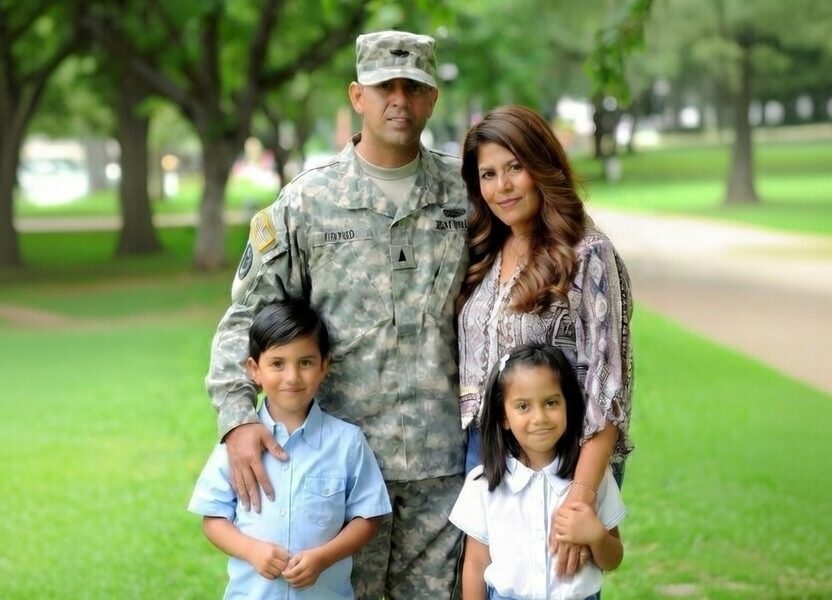
Nationwide – Amid intensified immigration enforcement under President Trump’s second term, a growing number of U.S. citizen children of undocumented immigrants are enlisting in the military as a strategy to secure temporary protection—and a potential path to legal status—for their parents.
The mechanism enabling this trend is Parole in Place (PIP), a discretionary program administered by U.S. Citizenship and Immigration Services (USCIS) since 2013. PIP allows certain undocumented immediate family members (spouses, parents, or children) of active-duty U.S. service members, Selected Reserve members, or qualifying veterans to receive temporary lawful presence, work authorization, and an expedited pathway to adjust to permanent resident status without leaving the United States—even if they entered unlawfully.
Eligibility requires the service member to be a U.S. citizen or lawful permanent resident, and the undocumented family member must meet specific criteria, including no disqualifying criminal history. Applications are reviewed case-by-case, and approval is not guaranteed. Once granted, PIP helps shield families from deportation proceedings and provides a route to a green card through adjustment of status.
Recruiters and community advocates in areas with large mixed-status populations report that the family-protection benefit has become a significant motivator for some young enlistees. In Hispanic and immigrant communities particularly affected by recent ICE operations, military service is increasingly viewed as a way to safeguard parents who have lived in the U.S. for decades but lack legal status.
Military branches, including the Army, Navy, Air Force, Marines, Coast Guard, and National Guard, continue to offer standard enlistment incentives such as education benefits, healthcare, housing allowances, and career training. However, the PIP option adds a powerful personal incentive for citizen children facing the threat of family separation due to widespread raids and deportations.
Immigration attorneys emphasize that enlisting solely for PIP is a high-stakes decision. Service members commit to years of duty, and PIP approval is discretionary. Factors such as prior deportations, multiple unlawful entries, or unresolved legal issues can complicate or prevent approval. Experts strongly advise consulting qualified immigration lawyers before pursuing this route.
The trend underscores the intersection of military service, family unity, and immigration policy in an era of heightened enforcement. While PIP has existed for over a decade, current conditions—including large-scale ICE deployments and public fears of family separations—have amplified its visibility and use as a protective measure.
No official statistics track how many enlistments are driven primarily by PIP eligibility, but anecdotal reports from recruiters, veterans’ organizations, and community groups suggest the number is rising in affected areas.
(Information based on USCIS Parole in Place guidelines, military recruiting policies, and reports from immigration advocacy organizations and media outlets as of January 12, 2026. PIP decisions are case-specific and discretionary; individuals should seek professional legal advice. All parties are presumed to act in good faith under current law.)
