

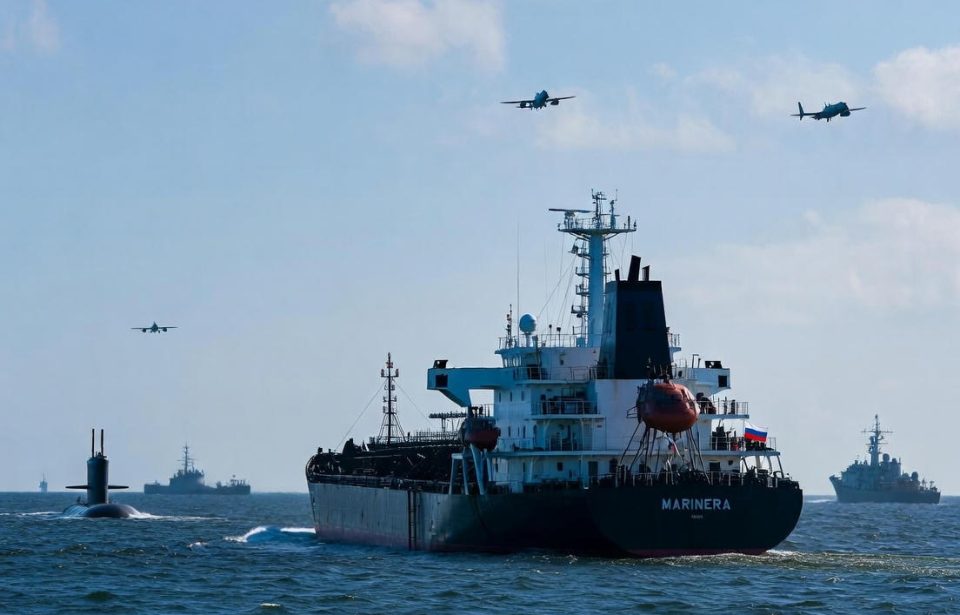
NORTH ATLANTIC — Tensions escalated in the North Atlantic this week as Russia deployed a submarine and other naval vessels to escort a Russian-flagged oil tanker accused of violating U.S. sanctions, while American forces actively pursue the ship with plans to board and seize it.
The vessel, recently renamed Marinera (formerly Bella 1), switched its registry from Guyana to Russia and is currently sailing empty about 300 kilometers south of Iceland, according to AIS tracking data from MarineTraffic. Over the past two days, it has navigated north past the western coast of the United Kingdom.
Two U.S. officials confirmed to CBS News—the BBC’s U.S. media partner—that Washington prefers to board and seize the tanker rather than sink it. U.S. military aircraft, including reconnaissance planes and a refueling tanker, have been observed in the area, underscoring the operation’s intensity.
Russia’s foreign ministry described the U.S. and NATO attention as “disproportionate,” insisting the ship is in international waters and fully compliant with maritime law. “For reasons unclear to us, the Russian ship is being given increased and clearly disproportionate attention by the US and Nato military, despite its peaceful status,” the ministry stated.
Background on the Tanker
The Marinera has a history of transporting Venezuelan crude oil and is suspected of shipping Iranian oil in breach of U.S. sanctions. Last month, the U.S. Coast Guard attempted to board the vessel in the Caribbean under a seizure warrant, but it altered course to evade them.
Maritime analysts note that such “dark fleet” tankers often change names, flags, and markings to dodge enforcement. “By reflagging to Russia, the vessel is no longer able to be boarded under [UN Convention on the Law of the Sea provisions for stateless vessels],” said Michelle Bockmann, a maritime intelligence analyst at Windward. However, experts emphasize that the ship’s underlying identity—tracked via its unique IMO number—and sanctions history remain unchanged.
This incident follows a pattern: Since the U.S. seizure of another sanctioned tanker, the Skipper, at least 19 similar vessels have switched to Russian flags, according to BBC Verify analysis.
Broader Context
The standoff comes amid heightened U.S. actions against sanctioned oil trade, including the recent arrest of Venezuelan leader Nicolás Maduro on suspicions of weapon and drug offenses, and President Trump’s orders for blockades on Venezuelan tankers.
U.S. Southern Command posted on social media: “Our sea services are vigilant, agile, and postured to track vessels of interest. When the call comes, we will be there.”
The UK Ministry of Defence declined to comment on operational matters involving allies.
As the tanker continues its voyage, the situation highlights growing challenges in enforcing international sanctions on shadowy oil shipping networks. Analysts warn that reflagging tactics complicate but do not fully shield vessels from pursuit based on their operational history.
This is a developing story, with potential implications for international maritime law and U.S.-Russia relations.
