

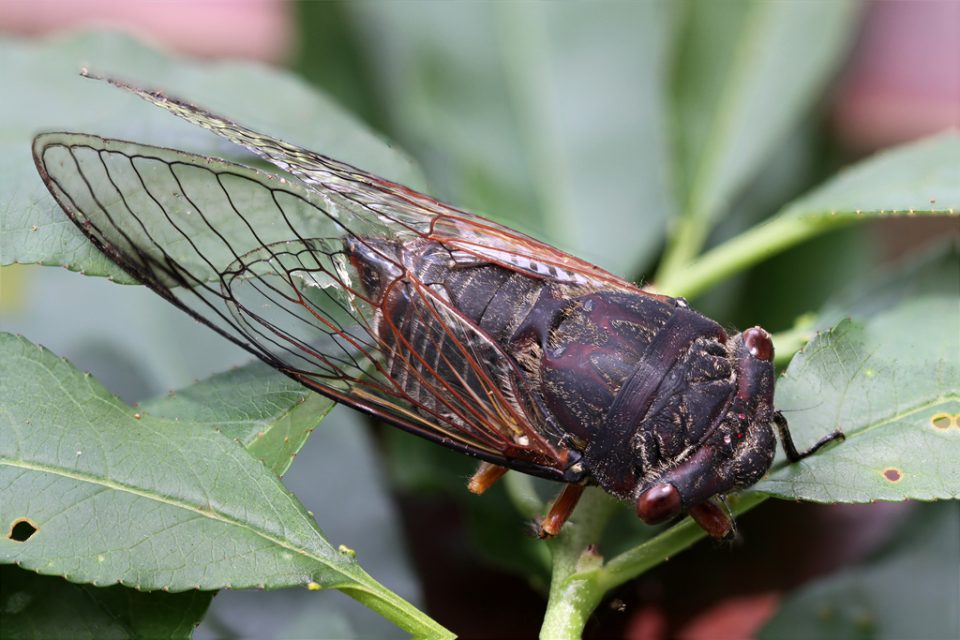
Arkansas, July 6, 2025 – This spring and summer, the United States is witnessing the emergence of Brood XIV, a 17-year periodical cicada brood known for its massive, noisy appearances across parts of the eastern U.S. While Arkansas is not a primary region for this brood’s emergence, residents may still encounter these striking red-eyed insects due to stragglers, climate shifts, and proximity to neighboring states, sparking curiosity and some surprise in the Natural State.
Periodical cicadas, belonging to the genus Magicicada, are unique insects that spend either 13 or 17 years underground as nymphs, feeding on tree root sap before emerging en masse to mate, lay eggs, and die within a few weeks. Brood XIV, one of the largest 17-year broods, last emerged in 2008 and is now surfacing again in 2025 across 12 states, including Georgia, Kentucky, Indiana, Tennessee, and Virginia, but not Arkansas. However, sightings in Arkansas are possible due to several factors.
In 2024, Arkansas experienced a significant emergence of Brood XIX, a 13-year brood known as the “Great Southern Brood,” which blanketed areas like Pike, Boone, and Washington counties with millions of cicadas. This year, Brood XIV’s range is concentrated in nearby states like Tennessee and Kentucky, where dense populations are expected. Cicada expert Dr. Gene Kritsky, professor emeritus at Mount St. Joseph University, notes that stragglers—cicadas that emerge off-cycle due to biological or environmental triggers—can appear outside their typical brood range. “Stragglers from Brood XIV or even late-emerging Brood XIX individuals could show up in Arkansas, especially near borders with Tennessee or Missouri,” Kritsky explains.
These stragglers may be mistaken for a full Brood XIV emergence, though they are typically fewer in number and less widespread. For example, in 2000, thousands of cicadas emerged four years early in Ohio, a phenomenon linked to warmer soil temperatures or genetic variations. Arkansas’s proximity to Brood XIV’s range in Tennessee increases the likelihood of such sightings, particularly in eastern counties like Crittenden or Mississippi. Additionally, climate change is shifting emergence patterns, with warmer springs causing cicadas to surface earlier—sometimes two weeks ahead of historical norms. A warm rain, which triggers emergences when soil temperatures reach 64°F, could prompt isolated cicadas to appear in Arkansas.
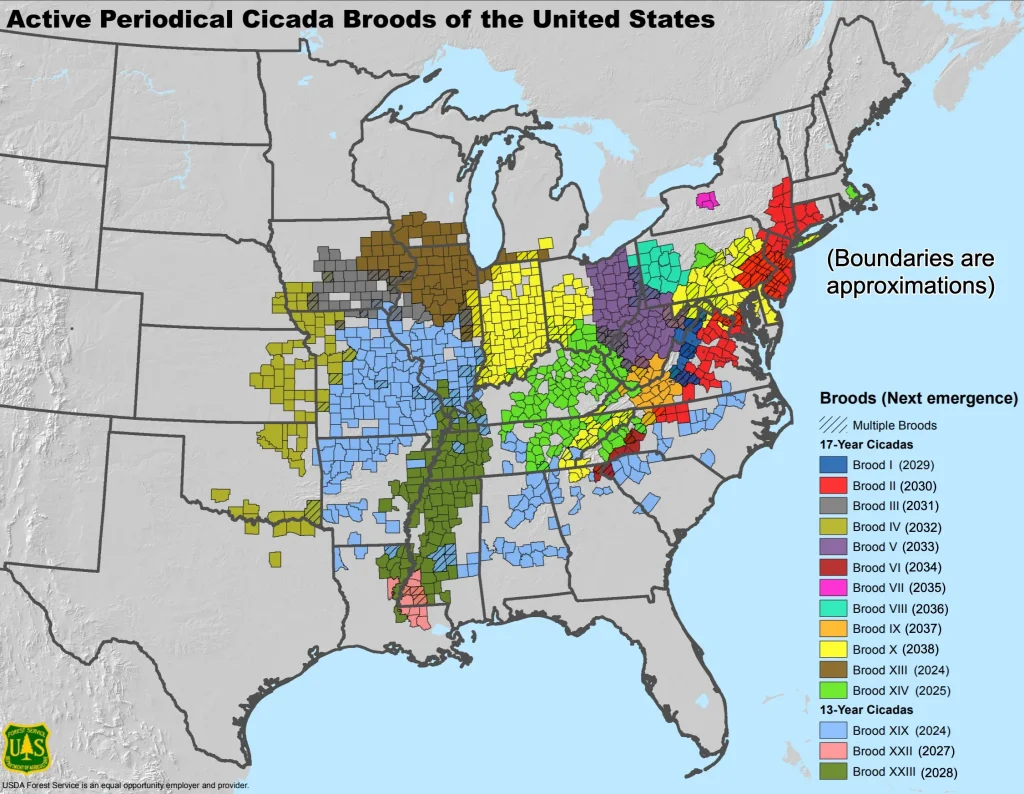
The Cicada Safari app, developed by Kritsky, has already recorded Brood XIV sightings in Tennessee and Kentucky, with some reports near Arkansas’s borders. Unlike the thunderous choruses of Brood XIX in 2024, which reached up to 100 decibels in places like Crater of Diamonds State Park, any Brood XIV cicadas in Arkansas will likely be sparse and quieter. These insects, characterized by black bodies, red eyes, and orange-veined wings, are harmless to humans and pets, feeding only on tree sap and posing no significant threat to gardens. However, female cicadas can damage young trees by laying eggs in branches, causing “flagging” where leaves brown and break—a natural pruning that often benefits trees long-term.
For Arkansas residents, spotting a Brood XIV cicada would be a rare treat. “It’s not a full emergence like last year, but finding even a few is exciting,” says Jon Zawislak, extension entomologist at the University of Arkansas. “These are some of the coolest insects in America.” Residents can report sightings via the Cicada Safari app or iNaturalist to help scientists track these anomalies. Those near the Tennessee border, especially in areas with mature trees, should listen for the distinctive buzzing of male cicadas, which signals their brief above-ground life.
The ecological impact of cicadas is largely positive, as their emergence aerates soil and their decomposing bodies enrich it with nutrients. While Arkansas won’t see the “cicada-palooza” expected in 2076, when Broods XIX and XIV will co-emerge, the possibility of spotting stragglers offers a glimpse of this natural spectacle. For now, Arkansans can keep an eye on trees and an ear out for the faint hum of these time-traveling insects, a reminder of nature’s complex rhythms.
