

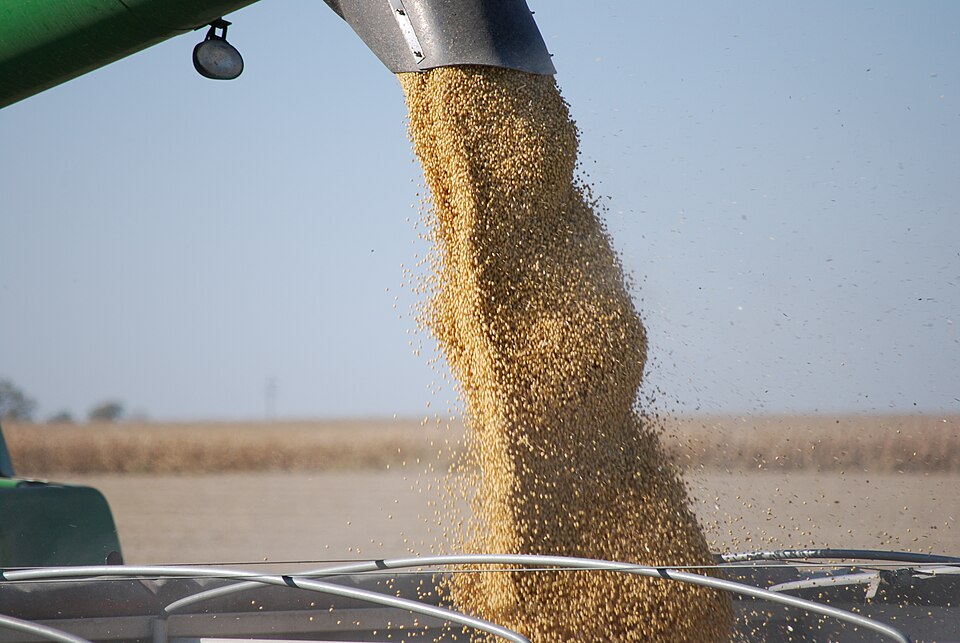
JONESBORO, Ark. – For the soybean growers scattered across the flat fields of Northeast Arkansas—from the muddy banks of the St. Francis River in Clay County to the rolling hills of Lawrence—the past few months have felt like a rerun of the 2018 trade war nightmare. Prices dipped below $10 a bushel, harvest delays from spring rains lingered into fall, and whispers of bankruptcy echoed in co-op parking lots. But yesterday’s handshake between President Donald Trump and Chinese President Xi Jinping in Busan, South Korea, just might turn the tide, promising a flood of exports that could pad bottom lines and keep family farms afloat.
The deal, hammered out on the sidelines of the Asia-Pacific Economic Cooperation summit, includes China’s pledge to buy 12 million metric tons of U.S. soybeans through January—enough to fill more than 480,000 semi-trucks—and at least 25 million metric tons annually for the next three years. That’s a lifeline for Arkansas producers, who planted about 3 million acres of the golden crop this year, expecting record yields around 56 bushels per acre despite the wet planting season.
Treasury Secretary Scott Bessent, fresh off Fox Business, put it bluntly: “China will return to regular purchase levels.” And the markets heard him loud and clear. Soybean futures on the Chicago Board of Trade opened at $10.92 a bushel Thursday morning but climbed to $11.06 by midday—a 1% bump that added a quarter to the value of every bushel. It’s the highest mark in 15 months, shrugging off earlier jitters about Brazil’s bumper crop undercutting U.S. sales. Local elevators in Walnut Ridge and Pocahontas reported a buzz, with cash bids ticking up 2 cents to around $10.13 a bushel.
This isn’t just numbers on a screen for folks like Tommy Purfeerst, a third-generation farmer out of Randolph County whose operation hugs the rail lines to the Mississippi barges. “We’ve been holding our breath since China went dark on U.S. beans back in March,” Purfeerst said, wiping sweat from his brow after unloading a wagon at the Demeter grain facility. “Planted assuming that market was there, like Rep. Crawford keeps saying. Now, with this deal, maybe we can ship straight to the Gulf instead of watching it all head south to Argentina.”
He’s not alone. The American Soybean Association, which fired off an urgent letter to Trump in August warning of a “trade and financial precipice,” hailed the truce as a “hard-fought win.” In Arkansas, where soybeans are the top cash crop and China snaps up more than half our exports, the timing couldn’t be sweeter. Harvest is wrapping up under unusually warm, dry October skies—some operators in Independence County finished a week early—and that delayed crop could hit ports just as Beijing’s crushers gear up for winter feed demand.
But it’s not all champagne in the combines. University of Arkansas Division of Agriculture economists pegged this year’s losses at $100 to $200 per acre for soybeans, thanks to input costs like fertilizer and fuel that haven’t budged. Global competition from Brazil, which slashed rainforests to ramp up production, still looms large. And while the deal pauses Trump’s threatened 100% tariffs on Chinese goods, experts like Lane Akre with Pro Farmer caution that without ironclad enforcement, it’s “optimism already priced in.”
Still, for Northeast Arkansas—home to some of the state’s highest soybean acres—the relief is tangible. Rep. Rick Crawford, R-Jonesboro, whose district blankets the Delta, has been pounding the pavement on this since day one. “This is what we’ve been fighting for,” Crawford said in a statement. “Arkansas soybeans back on Chinese tables means real dollars for our families, our co-ops, and our rural communities.”
As combines rumble toward season’s end, one thing’s clear: In a region where soybeans aren’t just a crop but the heartbeat of small-town life—from Friday night fundraisers to FFA chapters—the Trump-Xi accord feels like the first good rain after a long drought. Growers like Purfeerst are already eyeing next spring’s inputs with a bit more optimism. “If they follow through,” he added with a grin, “we might just make it to planting without the bank knocking.”
