

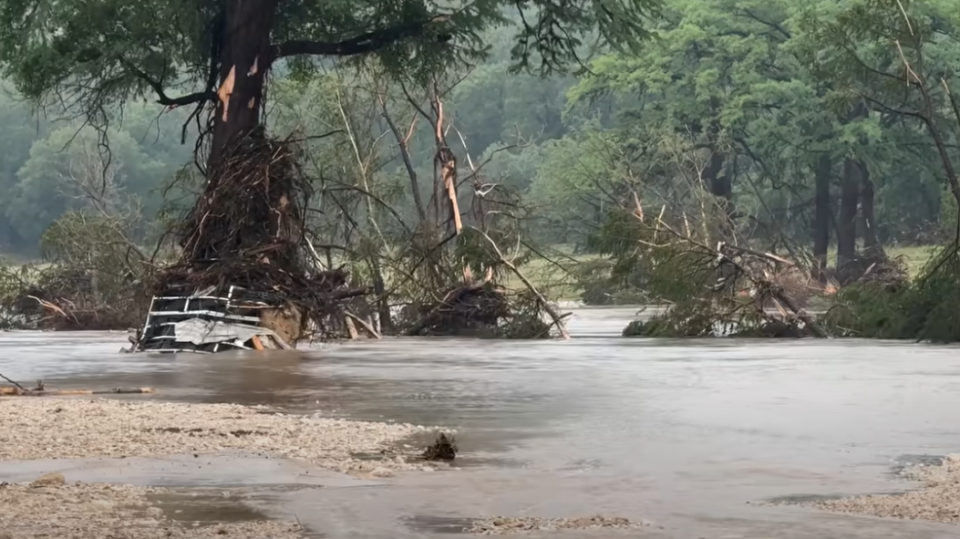
Kerrville, Texas, July 6, 2025 – A sudden and catastrophic flash flood struck Central Texas on July 4, 2025, leaving at least 69 people dead and many still missing, including 11 girls and a counselor from Camp Mystic, a Christian summer camp along the Guadalupe River. The disaster, triggered by torrential rains dumping up to 12 inches of water overnight, has been described as one of the deadliest weather events in the United States this year.
The Guadalupe River, swollen by the deluge, surged to historic levels, rising 26 feet in just 45 minutes in Kerrville, surpassing the devastating 1987 flood. Kerr County, the epicenter of the catastrophe, reported 59 fatalities, including 21 children, with Travis County, Burnet County, Kendall County, and Tom Green County also reporting deaths. The flooding overwhelmed communities, sweeping away homes, vehicles, and campgrounds, leaving a trail of destruction across the Texas Hill Country.
The National Weather Service (NWS) issued a flood watch on July 3, followed by flash flood warnings and emergencies early on July 4, but local officials and residents were caught off guard by the intensity and speed of the rainfall. The storm, fueled by moisture from the remnants of Tropical Storm Barry, dropped 5 to 11 inches of rain in a few hours, with one gauge in Mason County recording over 18 inches. Meteorologist Dr. Laura Bennett from the NWS explained, “The combination of saturated soils and an unusually intense low-pressure system created a perfect storm for flash flooding.”
Rescue operations continue around the clock, with over 850 people evacuated, many by helicopter and boat. The Texas National Guard, U.S. Coast Guard, and local first responders have deployed drones, divers, and high-water vehicles to search for survivors. At Camp Mystic, a nearly century-old institution, the flooding destroyed cabins and scattered debris, with mud lines indicating water levels over six feet high. Among the victims was Jane Ragsdale, director of the nearby Heart O’ the Hills camp, who perished on-site.
President Donald Trump signed a Major Disaster Declaration for Kerr County, unlocking federal aid for recovery efforts, including grants for temporary housing and low-cost loans. Governor Greg Abbott vowed that search efforts would continue “until the job is completed,” emphasizing the state’s commitment to finding those still missing. However, ongoing rain and flash flood warnings in nearby counties, including Burnet and Travis, have complicated recovery efforts, with roads like FM 620 and Highway 281 remaining impassable in some areas.
The tragedy has sparked heated debate over the adequacy of weather warning systems. Critics, including local resident and meteorology professor Dr. Samuel Torres, have pointed to staffing cuts at the National Oceanic and Atmospheric Administration (NOAA) as a factor in delayed or unclear warnings. Homeland Security Secretary Kristi Noem defended the response, citing efforts to upgrade outdated NWS technology, but acknowledged, “We’re working to ensure this doesn’t happen again.” Community advocates are now calling for improved flood alert systems and infrastructure upgrades in the region known as “Flash Flood Alley.”
Survivors have shared harrowing stories of loss and resilience. Barry Adelman, a Kerrville resident, recounted sheltering in his attic with his family as floodwaters engulfed their home. Angela Trafton, whose granddaughter survived the Camp Mystic disaster, described the emotional toll: “We’re grateful she’s safe, but the loss of her friends is unimaginable.” Reunification centers, including one at a local Walmart in Kerrville, have been established, and the Red Cross is providing food, shelter, and mental health support to affected families.
The economic impact is staggering, with preliminary estimates suggesting damages exceeding $500 million. Local businesses, particularly in tourism-heavy areas like Kerrville and Fredericksburg, face months of recovery. Environmental experts warn that climate-driven extreme weather events are increasing the frequency and severity of such floods. Dr. Emily Chen, a climate scientist at the University of Texas, noted, “The warming atmosphere holds more moisture, leading to these intense, rapid-onset storms. Texas must invest in resilient infrastructure now.”
As Central Texas braces for additional rainfall this week, the community mourns the lives lost and rallies to support survivors. Fundraising campaigns have raised over $2 million for affected families, and volunteers from across the state are assisting with cleanup efforts. Governor Abbott has called for a moment of silence on July 7 to honor the victims, while local leaders pledge to rebuild stronger. The flooding serves as a stark reminder of the region’s vulnerability and the urgent need for improved preparedness in the face of a changing climate.
